
Kemenag will Use AI for Hajj Pilgrimage 2024
The Ministry of Religious Affairs (Kemenag) plans to utilize artificial intelligence (AI) in the hajj pilgrimage services by the year 2024, particularly in the verificati ...
MAKKAH – The Ministry of Religious Affairs (Kemenag) plans to utilize artificial intelligence (AI) in the hajj pilgrimage services by the year 2024, particularly in the verification of pilgrim documents.
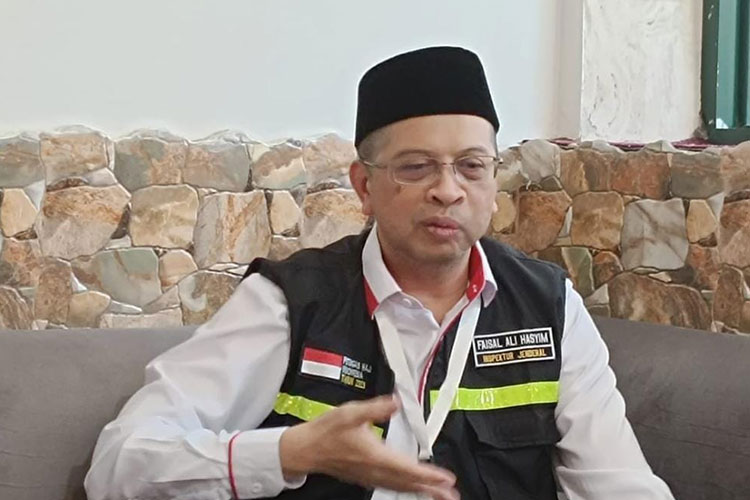
"After this year's hajj season, we will make improvements in document verification. This year, we have experienced challenges in the document verification process at the embarkation points," said Inspector General (Irjen) of Kemenag, Faisal Ali Hasyim, on Wednesday (July 5, 2023).
Faisal explained that one of the challenges faced during this year's hajj pilgrimage is the verification of documents. For example, the visa requests of pilgrims took a long time due to limitations in the Unified Hajj Information and Computerization System (Siskohat).
"In Siskohat, there are cases where a pilgrim has only one name, but the endorsement contains three names, either missing or with incomplete photos. I have requested the Irjen team for next year to push for the implementation of artificial intelligence together with the Siskohat team," he said.
By using AI, according to Faisal, if someone only inputs one word but fails to attach the three-page approval letter, the request will be rejected.
"For example, if the name 'Faisal' consists of only one word, the request cannot be processed. However, in the visa request, there is an endorsement with three names. Once attached, it can be processed," he explained.
With this system, unlike the current practice, Faisal stated that documents will not be passed around between districts, provinces, and the central office. Instead, at the district level, issues can be resolved directly.
"I have studied the Siskohat system, and it can be implemented. However, sometimes my intervention is needed for it to run effectively," he added.
Furthermore, the configuration change in the number of available seats on planes from 480 to 400 happened due to the delayed validation process of pilgrim data.

"This is also a note that I will address, which is the preparation of pilgrim document data. The visa application process last hajj season was delayed. If all the data is prepared completely from the beginning, it will be remarkable," he mentioned.
By incorporating AI technology into the hajj pilgrimage services, Kemenag aims to streamline and improve the verification process of pilgrim documents, ensuring a more efficient and effective hajj experience for all pilgrims. (*)
Simak breaking news dan berita pilihan TIMES Indonesia langsung dari WhatsApp-mu! Klik 👉 Channel TIMES Indonesia. Pastikan WhatsApp kamu sudah terpasang.
Berita ini juga tayang di portal nasional
Baca versi lengkapnya di jaringan nasional kami.