 News
News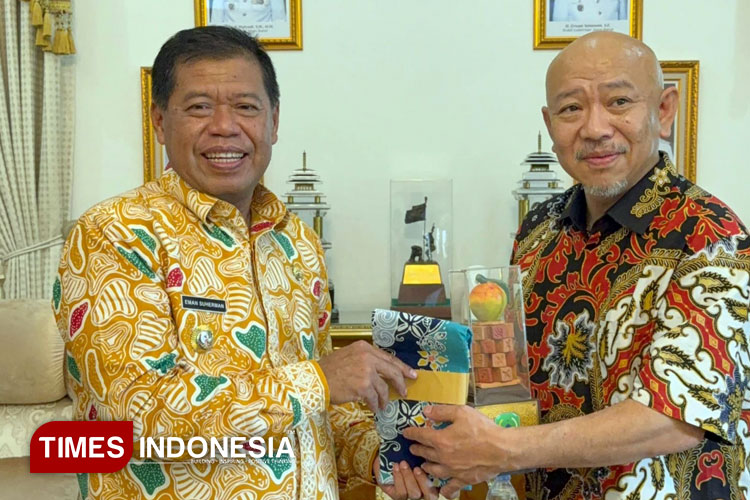
TIMES JAZIRAH, MAJALENGKA – Japan has officially designated Majalengka Regency in West Java as the pilot region for the Clean City Project, an environmental initiative aimed at introducing advanced and sustainable waste management technology in Indonesia.
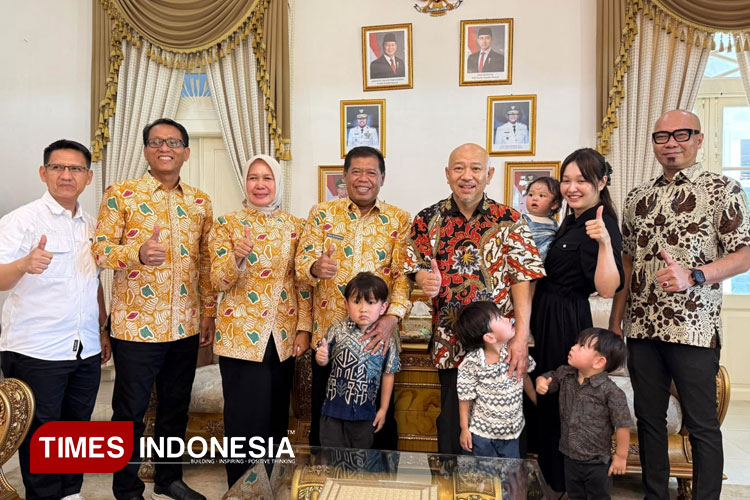
The decision was made following a series of assessments and discussions led by Johji Hayashi, Chair of the NGO JACE, who visited several regions across the country to evaluate their readiness and commitment to environmental reform. Among all candidates, Majalengka stood out due to its strong institutional support, clear vision, and serious approach to address waste management challenges.
Hayashi emphasized that the proactive involvement and openness of Majalengka Regent, H. Eman Suherman, played a decisive role in the selection process. The project in Majalengka is designed to move away from conventional waste disposal practices such as open dumping and incineration, which are widely recognized as harmful to both environmental sustainability and public health.
Environmentally Friendly Waste Management Without Incineration
Instead, the Clean City Project will implement innovative waste processing technology that operates without combustion, significantly reducing carbon emissions while preventing long-term environmental damage.
This initiative is closely aligned with Japan’s national commitment to achieving zero carbon emissions by 2050. Through the support of the EJEC agency, Japan seeks to assist developing countries in strengthening environmentally responsible governance and adopting sustainable urban management practices. Beyond technology deployment, the project places strong emphasis on local capacity building.
Rather than relying solely on Japanese experts, selected personnel recommended by the Majalengka government will receive specialized training in Japan to operate, maintain, and manage modern waste treatment systems independently.
Strengthening Local Capacity and Ensuring Sustainability
Looking ahead, Hayashi envisions Majalengka becoming a global reference point for sustainable waste management in Indonesia. Long-term plans include the establishment of a manufacturing facility in Majalengka to produce advanced waste processing machinery for international markets, a move expected to stimulate economic growth by creating jobs, reducing unemployment, and strengthening the local industrial ecosystem.
The success of the Clean City Project will be evaluated through measurable indicators such as reductions in waste volume, improved efficiency of waste collection systems—including the potential use of drone technology—and decreased carbon emissions.
These outcomes will be reported to the Japanese government as part of its progress monitoring toward the 2050 zero-emission target. Majalengka is projected to emerge as a leading example of low-emission urban waste management in Indonesia, contributing to the nation’s broader goal of achieving carbon neutrality by 2060.
Evaluation, Impact, and Future Prospects
In addition to environmental benefits, the project is expected to attract international investors, researchers, and visitors, generating positive impacts across sectors such as tourism, transportation, and hospitality while increasing local revenue.
"The project’s true success will only be realized when its benefits are clearly felt by the local community, underscoring the importance of technology transfer and strong local participation to ensure long-term sustainability," Eman stressed.
With the integration of advanced technology, skilled local human resources, and supportive infrastructure, the Majalengka government remains confident in its role as a national pioneer in environmentally sustainable waste management and a model for other regions across Indonesia. (*)
Artikel ini sebelumnya sudah tayang di TIMES Indonesia dengan judul: Majalengka Chosen as Pioneer of Japan’s Clean City Project
| Writer | : Khodijah Siti |
| Editor | : Khodijah Siti |














 TIMES Jazirah